





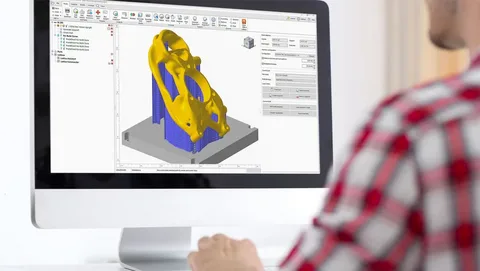
Industrial additive manufacturing has evolved far beyond simple 3D print preparation. Today, production environments handle complex workflows, multiple users, and large fleets of printers operating at the same time. Because of this complexity, manual management is no longer efficient.
Without proper software infrastructure, businesses often face delays, inconsistent print quality, and poor visibility across production systems. As demand increases, organizations are turning to advanced 3D printer slicer software and centralized platforms to manage operations more effectively. These tools connect design preparation with real-world production. As a result, manufacturers gain better control, improved efficiency, and stronger consistency across all print jobs.
3D Printer Slicer Software Is Essential
As production expands, manual workflows quickly become unmanageable. Many industrial setups run dozens or even hundreds of printers across different teams or locations. Without coordination, this creates confusion and inefficiency.
Modern 3D printer slicer software solves this problem by centralizing print preparation and standardizing workflows. It allows teams to manage jobs from a single platform instead of relying on separate systems. This creates several benefits. First, it improves consistency across all prints. Second, it reduces errors caused by manual configuration. Finally, it enhances collaboration between distributed teams.
Cloud-based systems make this even more powerful. Engineers and operators can work together in real time, even if they are in different locations. This level of connectivity significantly improves production speed and accuracy.
Key Advantages of 3D Printer Slicer Software
- They allow teams to manage print queues more efficiently. They also ensure standardized material profiles across different machines. In addition, they support shared slicing environments that reduce duplication of work.
- Another major advantage is remote accessibility. Users can prepare and monitor jobs without being physically present near the machines. This flexibility improves workflow efficiency and reduces downtime.
- Finally, centralized systems improve overall print consistency. By using standardized settings, organizations can maintain uniform output quality across all production units.
Features Industrial Users Should Look For
Industrial additive manufacturing requires 3D Printer Slicer Software that delivers precision, reliability, and scalability. Not all platforms meet these requirements, so careful selection is important.
Advanced Slicing Capabilities
- High-quality slicing tools are essential for complex industrial parts. Effective software should support accurate geometry processing, adaptive layer control, and intelligent support generation.
- It should also offer material profile management and precise G-code creation. These features directly affect print quality, structural strength, and material efficiency.
- In addition, simulation tools help teams preview prints before production begins. This reduces the risk of errors and material waste.
Printer Fleet Compatibility
- Many organizations use printers from multiple manufacturers. Without compatibility, workflows become fragmented and difficult to manage.
- Good slicer software supports a wide range of printer types and materials. It also allows centralized control across all devices. This unified approach simplifies operations and improves scalability.
- As fleets grow, compatibility becomes even more important. It ensures that new machines can be added without disrupting existing workflows.
Automated Nesting and Build Optimization
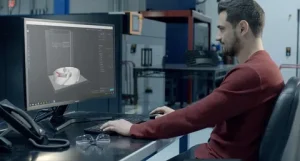
Efficiency is a key factor in industrial manufacturing. Automated nesting tools help maximize build plate usage by arranging parts intelligently. This leads to faster production cycles and reduced material waste. It also improves batch processing efficiency, especially in high-volume environments. Over time, these optimizations significantly reduce operational costs and increase output capacity.
Centralized Management for Industrial Operations
Beyond slicing, enterprises need tools that manage entire production ecosystems. Centralized management platforms provide visibility and control across all operations.
Multi-User Workflow Coordination
Large manufacturing environments involve multiple teams working together. Engineers, operators, and administrators all interact with the same systems. Role-based permissions help control access and responsibilities. Shared queues and workflow controls ensure smooth coordination between teams. This reduces conflicts and improves overall productivity.
Remote Monitoring and Control
Real-time monitoring is critical for distributed printer networks. Centralized dashboards allow teams to track printer status, manage queues, and detect failures instantly. Remote access also reduces response time when issues occur.
Analytics and Performance Tracking
Data plays a major role in optimizing additive manufacturing workflows. Without analytics, inefficiencies often go unnoticed. Modern platforms track printer usage, failure rates, material consumption, and production output. These insights help organizations make informed decisions. Over time, this data improves planning, reduces waste, and increases operational efficiency.
Standard Workflow for Industrial Print Preparation
A structured workflow ensures consistency across all production stages.
- First, operators import and analyze digital models. This helps detect errors such as mesh issues or unsupported structures early in the process.
- Next, standardized material profiles are applied. These ensure consistent quality across different printers and operators.
- Then, teams optimize orientation and support structures to reduce material usage and improve build efficiency.
- Finally, G-code is reviewed carefully before printing begins. This step ensures that all settings are correct and production-ready.
Why Integrated Platforms Are the Future
Industrial additive manufacturing is moving toward fully connected ecosystems. Instead of using separate tools, companies now prefer integrated platforms that combine slicing, monitoring, analytics, and workflow management.
One example is 3DPrinterOS, which offers cloud-based slicing, centralized control, and multi-user coordination in a single system. It supports distributed manufacturing environments, educational institutions, and industrial printer fleets. This type of integration helps businesses scale efficiently while maintaining quality and visibility across operations.
Conclusion
Industrial 3D printing is no longer just about creating parts. It is about managing complex production systems with precision and efficiency. As operations scale, the need for advanced 3D printer slicer software becomes more important.
By using centralized platforms, businesses can improve consistency, reduce errors, and increase productivity. Features like automated slicing, fleet management, and real-time monitoring create a strong foundation for growth. In the end, the right software does more than prepare prints. It alters the functionality of whole manufacturing ecosystems, enhancing their intelligence, speed, and scalability.