




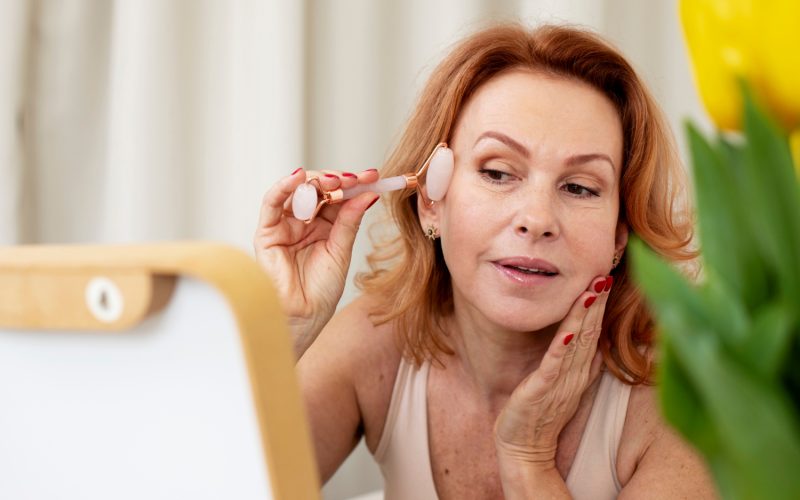
Fine lines. Dullness. Uneven texture. One day your skin looks fresh. The next day it suddenly looks tired and older than you feel. That shift can be confusing and frustrating.
The good news is that you do not need a complicated ten-step anti-aging skincare routine to see real results. What you actually need are the best anti-aging ingredients that work for your skin type. When you focus on ingredients for youthful skin instead of trends, you start to see smoother, brighter, and firmer skin over time.
In this guide, you will discover dermatologist-recommended anti-aging ingredients for every skin type. You will also understand what ingredients help reduce wrinkles and what to avoid if you have dry, oily, sensitive, or combination skin. By the end, you will be able to build a simple routine with the best skincare ingredients for glowing youthful skin that actually fits your lifestyle.
Who This Is For
This article is for you if any of these sound familiar:
- Noticing fine lines? Want the best ingredients for fine lines and wrinkles.
- Overwhelmed by trends? Need anti-aging ingredients that actually work.
- Dry, oily, sensitive, or combination skin? Unsure which anti-aging ingredients are safe.
- Beginner? Seek best anti-aging ingredients for beginners without barrier damage.
- Curious about retinol vs hyaluronic acid for anti-aging skin? Get clear guidance.
If you want science-backed skincare ingredients for aging skin with simple explanations and practical tips, this guide is designed for you.
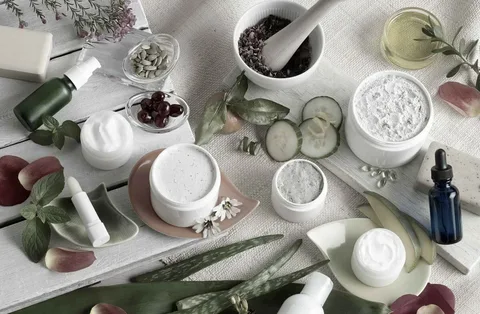
Understanding Skin Aging & Ingredients
What Causes Skin Aging?
Skin aging happens for a mix of internal and external reasons. Some factors are natural and others are in your control.
Key causes of skin aging include:
- Loss of collagen and elastin. Your skin slowly produces less collagen and elastin as you age. This leads to sagging, fine lines, and wrinkles.
- Sun damage. Ultraviolet rays break down collagen and cause pigmentation and rough texture over time.
- Dehydration. When the skin barrier is weak or your skin lacks water, fine lines and dullness become more visible.
- Oxidative stress. Pollution, smoke, and stress create free radicals that damage skin cells and speed up aging.
- Repeated facial movements. Smiling, frowning, and squinting can deepen expression lines with age.
You cannot stop the clock, but you can slow visible aging with the right anti-aging skincare ingredients and daily habits like sunscreen use.
Why Ingredients Matter More Than Trends
The skincare market is full of buzzwords and viral products. New serums appear every week. That can make it hard to know what truly works.
The truth is that your skin does not care about marketing. It responds to active molecules that are proven to improve texture, tone, and firmness. That is why focusing on the best anti-aging skincare ingredients is more important than chasing every new launch.
When you choose products based on their ingredient list, you can:
- Target specific concerns like wrinkles, pigmentation, or dryness.
- Avoid irritation by selecting anti-aging ingredients for sensitive skin or acne-prone skin carefully.
- Build a routine that supports collagen and hydration long term.
In simple words, ingredients are the engine of your routine. Packaging and trends are just decoration.
Core Content: Best Anti-Aging Ingredients by Skin Type
For Dry Skin
Dry skin needs both anti-aging power and deep hydration. The goal is to smooth fine lines while repairing the skin barrier. Look for these anti-aging ingredients for dry skin:
-
Hyaluronic acid
This is a powerful humectant that attracts and holds water in your skin. It plumps fine lines temporarily and improves overall hydration. It is one of the best skincare ingredients for glowing youthful skin, especially if your skin feels tight or flaky. -
Ceramides
Ceramides are lipids that form a protective layer in your skin barrier. They prevent moisture loss and reduce irritation. For dry and aging skin, ceramides support a stronger barrier so other anti-aging ingredients can work better. -
Glycerin and panthenol
Glycerin draws water into the skin while panthenol soothes and supports barrier repair. Together they help soften rough patches and make your skin feel more comfortable. -
Peptides
Peptides are short chains of amino acids that can support collagen production and improve firmness over time. For dry skin, nourishing peptide creams or serums offer both comfort and anti-aging benefits. They are excellent collagen-boosting skincare ingredients for mature or dehydrated skin. -
Gentle retinoids
Retinol is a gold standard for anti-aging, but it can be tricky for dry skin. Look for lower-strength retinol or encapsulated retinol formulas. Combine them with rich moisturizers and hydrating ingredients like hyaluronic acid. This allows you to enjoy the benefits of retinol with less dryness.
When comparing retinol vs hyaluronic acid for anti-aging skin, remember this. Retinol works on cell turnover and collagen. Hyaluronic acid focuses on hydration and plumpness. Dry skin often benefits from using both in a routine, with hyaluronic acid applied after cleansing and retinol used at night a few times a week.
For Oily & Acne-Prone Skin
Oily and acne-prone skin still ages. Fine lines and enlarged pores can appear along with breakouts. The right anti-aging ingredients for oily skin should control oil, keep pores clear, and support collagen without clogging.
Key options include:
-
Retinol and retinoids
Retinol is one of the best anti-aging ingredients that actually work for oily and acne-prone skin. It increases cell turnover, reduces clogged pores, and improves skin texture over time. It also boosts collagen and helps with fine lines. Start with a low concentration and use it only at night. -
Niacinamide
Niacinamide is a multitasking ingredient. It helps regulate sebum, reduces the look of pores, fades dark spots, and strengthens the skin barrier. It is gentle enough for most skin types. It is one of the best ingredients for fine lines and wrinkles if you also struggle with oiliness or post-acne marks. -
Salicylic acid
This beta hydroxy acid exfoliates inside the pore. It helps prevent breakouts and smooths rough texture. When used in moderation, it supports clearer and more even skin as part of an anti-aging skincare routine. -
Lightweight antioxidants: Vitamin C and green tea extract
These ingredients fight free radical damage from pollution and UV exposure. They also brighten the skin and support collagen. Look for non-greasy serums labeled as suitable for oily or acne-prone skin.
The best anti-aging ingredients for oily skin focus on balance. You want to avoid heavy textures but still protect the skin barrier and collagen over time.
For Sensitive Skin
Sensitive skin can react easily to strong actives. Redness, stinging, and burning are common complaints. That does not mean you must skip anti-aging completely. It just means you need carefully chosen anti-aging ingredients for sensitive skin.
Gentle yet effective options include:
-
Bakuchiol
Bakuchiol is a plant-based ingredient often described as a gentler alternative to retinol. It can help reduce the look of fine lines and improve texture, but it is usually better tolerated by sensitive skin. -
Low-strength retinol or retinal with buffers
If your skin can handle it, a very low percentage retinol or retinal can be used with plenty of moisturizer and short contact times. Always patch test first and introduce slowly. -
Centella asiatica and madecassoside
These calming ingredients soothe irritation and support barrier repair. They are great partners for other anti-aging ingredients because they help keep the skin comfortable. -
Hyaluronic acid and glycerin
Hydrating molecules like hyaluronic acid and glycerin support plumpness and reduce the appearance of fine lines caused by dehydration. They are usually safe choices for reactive skin when formulas are fragrance-free. -
Niacinamide at lower percentages
Niacinamide can strengthen the barrier and reduce redness. Sensitive skin often does better with lower concentrations, for example around two to five percent.
For sensitive skin, the best anti-aging ingredients are the ones you can use consistently without flare-ups. Less is often more.
For Combination Skin
Combination skin can feel oily in some areas and dry in others. The challenge is to balance both needs while targeting aging concerns. The right anti-aging ingredients for combination skin should hydrate dry zones, control shine in the T-zone, and improve overall texture.
Helpful ingredients include:
-
Niacinamide
This ingredient is excellent for combination skin because it is balancing. It supports the skin barrier, helps with oil control, brightens dark spots, and softens fine lines. -
Hyaluronic acid
A lightweight hyaluronic acid serum can hydrate dry areas without making the T-zone greasy. Layer it under a suitable moisturizer for your skin. -
Retinol
Use a gentle retinol serum at night two to three times a week. Apply a bit more moisturizer on the dry parts of your face. This allows you to get anti-aging benefits across your whole face with minimal irritation. -
Lactic acid or mandelic acid
These mild exfoliating acids can help smooth texture and improve radiance. They are often better tolerated than stronger acids and can work well in an anti-aging skincare routine for combination skin when used once or twice a week.
For combination skin, think flexible layering. Use lighter textures on oily areas and slightly richer creams where you feel dryness.
Universal Anti-Aging Ingredients (For All Skin Types)
Some ingredients are helpful for almost everyone. These universal anti-aging ingredients support collagen, fight free radicals, and improve overall skin quality regardless of skin type.
Top choices include:
-
Sunscreen
Daily sunscreen is non-negotiable. Ultraviolet exposure is one of the biggest causes of premature aging. Broad-spectrum sunscreen protects collagen and prevents spots and wrinkles. It is the most powerful anti-aging product in any routine. -
Retinoids
Retinol and other retinoids like retinal are some of the best anti-aging ingredients that actually work. They improve cell turnover, fade hyperpigmentation, smooth texture, and support collagen. Nearly every dermatologist-recommended anti-aging ingredients list includes retinoids. Start slow and adjust based on your skin type. -
Vitamin C
Vitamin C is a strong antioxidant. It helps protect against pollution and UV damage, brightens dullness, and supports collagen synthesis. It pairs well with sunscreen in the morning. -
Peptides
Certain peptides signal the skin to support collagen and elastin. They are usually well-tolerated and can be used with other actives to improve firmness and elasticity over time. -
Hyaluronic acid
When people ask about hyaluronic acid vs retinol for anti-aging, the real answer is that they do different jobs. Hyaluronic acid hydrates and plumps. Retinol renews and rebuilds. For most skin types, combining these universal anti-aging ingredients gives the best long-term results.
These skincare ingredients for aging skin can form the backbone of a routine, with small adjustments based on whether your skin is dry, oily, sensitive, or combination.
Quick Tips for Building Your Routine
Putting everything together does not have to be complicated. Use these simple guidelines when you build your own anti-aging skincare routine:
-
Start with the basics
Gentle cleanser, moisturizer, and broad-spectrum sunscreen are the foundation. Without these, even the best anti-aging ingredients will not perform at their full potential. -
Introduce one active at a time
Whether it is retinol, vitamin C, or an exfoliating acid, add only one new active and use it consistently for a few weeks. This helps you see what actually works and reduces the risk of irritation. -
Use actives at the right time
Vitamin C and antioxidants are usually better in the morning under sunscreen. Retinol and stronger acids work best at night. Hydrating ingredients like hyaluronic acid can be used both morning and evening. -
Match ingredients to your skin type
Choose richer textures and barrier-supporting ingredients for dry skin. Pick lighter, non-comedogenic formulas and oil-controlling ingredients for oily skin. Select soothing and low-strength actives for sensitive skin. Layer smartly if you have combination skin. -
Do not forget your neck and chest
These areas show aging quickly. Take your anti-aging ingredients for every skin type approach beyond just your face. -
Be patient and consistent
Anti-aging ingredients that actually work need time. Most people see noticeable changes in texture and fine lines after several weeks to a few months of steady use.
Conclusion
The best anti-aging ingredients are proven, science-backed choices like sunscreen, retinoids, vitamin C, peptides, and hyaluronic acid. Tailor them to your skin type for real results. Build a simple anti-aging skincare routine focused on ingredients for youthful skin. Your smoother, brighter skin awaits.