





As businesses expand their digital operations, maintaining productivity, workflow visibility, and compliance becomes increasingly challenging. This has led to rising demand for AI Employee Monitor app development and AI Employee Monitor System Development solutions. These tools enable organizations to track work patterns, detect inefficiencies, and ensure that teams comply with internal and regulatory standards. Modern AI-driven monitoring systems go beyond traditional time-tracking or screenshot tools by offering predictive insights, automated reporting, and advanced behavioral analytics.
Below is a detailed guide explaining the components, features, workflow, and benefits of developing an AI employee monitoring system.
Understanding AI Employee Monitoring Technology
AI employee monitoring technology is designed to collect and analyze real-time employee data across devices, applications, and workflows. Unlike traditional systems that simply log activity, AI-driven solutions learn from patterns to identify productivity trends, anomalies, and potential risks.
How AI Transforms Conventional Employee Monitoring
AI capabilities enhance monitoring systems in several ways:
-
Automated activity classification that identifies productive, unproductive, or idle tasks.
-
Real-time anomaly detection for suspicious behavior or potential compliance breaches.
-
Intelligent scheduling that predicts workload capacity and resource optimization.
-
Accurate time analytics that eliminates human error from manual logs.
-
Proactive alerts and recommendations to improve team performance.
By using machine learning, deep learning, computer vision, and natural language processing, AI brings transparency and strategic foresight into workforce management.
Key Components of an AI Employee Monitoring System
Successful AI Employee Monitor System Development includes integrating several essential components that work together seamlessly.
Centralized Admin Dashboard
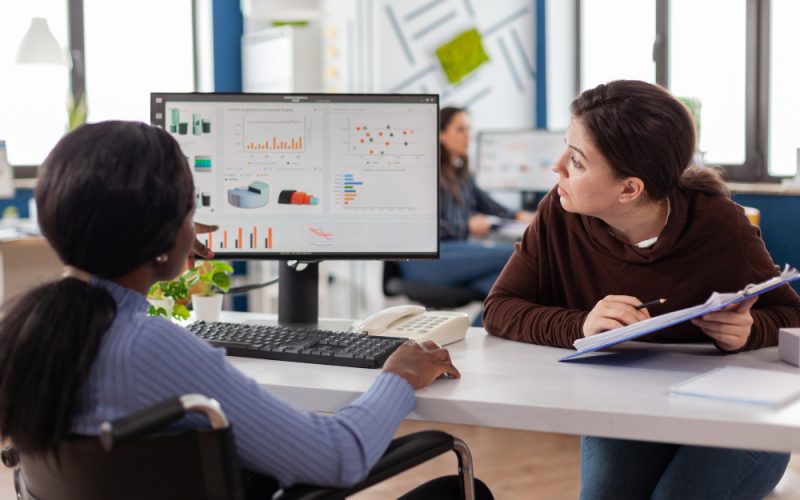
A unified dashboard allows managers to review productivity reports, track active sessions, access logs, and configure monitoring rules. It presents real-time data and historical insights, enabling faster decision-making.
Intelligent Tracking Engine
This engine gathers and analyzes data such as:
-
Application usage
-
Browser activity
-
Document interactions
-
Screen time and idle time
-
Task-switching behavior
AI interprets this data to provide context-aware insights, not just raw activity logs.
Computer Vision Module
For organizations requiring enhanced compliance monitoring, computer vision helps:
-
Detect unauthorized device presence
-
Identify distractions during critical workflows
-
Track workstation activities without violating privacy settings
Behavioral Analytics Layer
ML models observe user behavior patterns to detect:
-
Productivity dips
-
Work anomalies
-
Burnout risk
-
Misuse of sensitive information
-
Deviations from standard workflows
Data Security and Access Control
Security is essential in AI employee monitoring. The system must include:
-
Encryption of data at rest and in transit
-
Role-based access controls
-
Tamper-proof audit trails
-
Secure cloud or on-premises deployment options
Core Features to Include in AI Employee Monitor App Development
Developers should create a comprehensive feature set that meets both performance and compliance goals.
Real-Time Activity Tracking
Continuously monitors app usage, URLs, keystrokes (without capturing personal content), and system activity.
Productivity Scoring
AI generates scores based on activity classification, time allocation, and efficiency patterns.
Automated Reports
Daily, weekly, and monthly reports allow managers to understand trends and optimize operations.
Task and Project Monitoring
Helps track project progress, time spent, deadlines, and resource allocation to enhance teamwork visibility.
Screen Capture and Recording (Configurable)
Some industries require periodic screenshots or video logs. These features must be customizable to comply with regional privacy laws.
Attendance and Time Tracking
AI auto-detects:
-
Login and logout times
-
Idle periods
-
Break durations
-
Overtime patterns
Insider Threat Detection
Recognizes unusual file access, unauthorized data transfers, or suspicious login activity.
Remote Work Monitoring
Supports distributed teams by offering virtual tracking of workflows and ensuring responsibility across remote environments.
Integrations with HRMS and Project Tools
Integrating with platforms like Slack, Trello, Jira, or HR systems ensures smooth workflow synchronization.
Step-by-Step AI Employee Monitoring App Development Process
Benefits of Implementing an AI Employee Monitoring System
Requirement Identification and Compliance Analysis
Before building the system, developers must understand the organization’s productivity goals, security policies, and regional compliance laws such as GDPR, CCPA, or HIPAA.
UI/UX Workflow Planning
A seamless dashboard, intuitive controls, easy navigation, and well-visualized analytics screens are crucial for admin and employee adoption.
Backend Architecture Setup
Developers create secure APIs, data pipelines, AI models, and storage configurations to support reliable and scalable performance.
AI and ML Model Training
Models are trained using large datasets to classify productivity, detect risks, and understand work behavior patterns accurately.
System Integration and Feature Development
Features such as time tracking, reporting, and monitoring modules are integrated and tested.
Privacy and Security Implementation
Based on local regulations, customizable privacy modes, data retention policies, and employee consent mechanisms must be added.
Quality Testing and Optimization
The system undergoes performance testing, security testing, usability checks, and compliance validation.
Deployment and Post-Launch Monitoring
Whether deployed on the cloud or on-premises, continuous updates, model retraining, and feature improvements help maintain accuracy and reliability.
Business Benefits of AI Employee Monitoring Systems
Increased Productivity
AI insights help identify inefficiencies, redundant tasks, and workflow gaps that reduce output.
Improved Compliance and Security
Real-time alerts and monitoring help maintain regulatory compliance and prevent internal threats.
Enhanced Remote Workforce Management
Managers gain full visibility into distributed teams without needing micromanagement.
Better Resource Allocation
AI predicts workload patterns, helping optimize staffing and reduce unnecessary operational costs.
Reduced Administrative Burden
Automated reports, attendance tracking, and activity logs reduce manual HR tasks.
Data-Driven Decision Making
Leaders can analyze trends and make strategic decisions for workforce planning, performance improvements, and operational enhancements.
Cost Factors in AI Employee Monitor App Development
The cost depends on:
-
Complexity of AI and ML models
-
Type of deployment (cloud or on-premises)
-
Number of employees and data volume
-
Custom features such as video monitoring or predictive analytics
-
Integration requirements
-
UI/UX complexity
-
Security architecture and compliance features
On average, AI employee monitoring solutions range from moderate to high investment depending on the scale and feature sophistication.
Who Needs AI Employee Monitoring Solutions?
AI employee monitoring systems are widely used in:
-
IT companies
-
BPOs and call centers
-
Finance and banking
-
Healthcare institutions
-
Remote-first organizations
-
Logistics and supply chain companies
-
Government firms
-
Corporate enterprises handling sensitive data
Any business aiming to enhance productivity, streamline operations, or improve compliance can benefit from AI monitoring tools.
Challenges to Consider in AI Employee Monitor System Development
Privacy Concerns
Developers must build privacy-first systems that provide transparency about what is monitored.
Legal Compliance
Different regions have strict employee monitoring laws. The system must allow configurable monitoring levels.
Data Security
Large volumes of sensitive data require robust cybersecurity strategies.
AI Accuracy and Bias
AI models must be continuously improved to avoid false positives or misinterpretations of employee behavior.
Future Trends in AI Employee Monitoring
-
Predictive analytics for workforce performance forecasting
-
Emotion analysis for employee well-being
-
Voice analytics for call center performance
-
Smart automation for attendance and shift management
-
Zero-trust security integrations
-
Hybrid monitoring combining IoT and AI tools
The future of AI monitoring is moving towards intelligent, ethical, and completely transparent systems that support both businesses and employees.
Conclusion
AI Employee Monitor app development and AI Employee Monitor System Development are transforming how businesses manage productivity, compliance, and workforce efficiency. These systems are not limited to tracking user activity; they are becoming strategic tools that provide insight-driven decision-making, operational optimization, and enhanced data security.
Companies adopting AI-driven monitoring solutions gain a competitive edge through improved transparency, reduced administrative effort, and scalable workflows. As remote work and digital operations continue to grow, AI-based monitoring platforms will play a central role in shaping smarter, more productive workplaces.
Frequently Asked Questions
What is an AI employee monitoring system?
An AI employee monitoring system uses artificial intelligence to track, analyze, and report employee activity patterns, productivity levels, and compliance metrics.
Is AI-based employee monitoring legal?
It is legal when companies follow regional labor laws, ensure transparency, and obtain employee consent where required.
What features are essential in an AI employee monitoring app?
Key features include real-time tracking, productivity analytics, automated reporting, attendance management, insider threat detection, and behavioral analytics.
How long does AI Employee Monitor app development take?
Timelines vary based on complexity but typically range from 3 to 6 months for a fully functional system.
Can AI monitoring support remote teams?
Yes, AI systems are ideal for remote work environments as they provide activity visibility, performance tracking, and compliance monitoring without physical supervision.
How much does it cost to build an AI monitoring system?
Costs depend on the features, compliance requirements, and deployment preference. Custom enterprise-level solutions typically require a higher investment than basic monitoring tools.