



Tesla, the innovative electric vehicle (EV) manufacturer led by visionary entrepreneur Elon Musk, continues to captivate the business world with its exceptional performance in the latest quarterly earnings report.
The company’s relentless drive for innovation, coupled with its commitment to sustainability, has propelled it to new heights, surpassing expectations and setting new benchmarks in the EV industry.
In this article, we will delve into the details of impressive quarterly earnings performance, explore the factors driving its success, and discuss the implications of its achievements on the future of the automotive industry.
Breaking Records
Tesla’s quarterly earnings report has made waves in the automotive industry, as the company achieved remarkable results and surpassed previous records. The report revealed a significant increase in revenue, surpassing all previous quarters in history.
This outstanding financial performance highlights the company’s ability to generate substantial sales and establish a dominant position in the competitive EV market. The surge in Tesla’s profitability has also exceeded market expectations, attracting the attention of investors worldwide.
Not only has Tesla’s bottom line improved, but the company has also managed to sustain growth despite economic challenges faced by other players in the industry.
Tesla’s consistent ability to beat earnings estimates underscores its leadership in the EV market and its unwavering commitment to scaling its operations.
The impressive quarterly earnings performance showcases Tesla’s growing influence and solidifies its status as a key player in the automotive industry.
The company’s stock performance has also been a reflection of its financial health, further bolstering investor confidence and affirming its position as a technological and financial powerhouse.
Key Drivers of Success
Tesla’s stellar performance is not merely the result of good luck; it is driven by a variety of strategic factors that the company has carefully cultivated over the years. Let’s explore the key drivers behind Tesla’s ongoing success:
1. Innovation and Technological Leadership
One of the primary drivers behind success is its relentless pursuit of innovation and technological advancement.
Tesla has consistently pushed the boundaries of EV technology, introducing cutting-edge features and advancements that set it apart from traditional automakers.
The company’s commitment to research and development (R&D) has paid off in the form of vehicles that boast remarkable range, unparalleled performance, and state-of-the-art autonomous driving capabilities.
Tesla’s flagship Model S continues to be a benchmark in the electric vehicle market, offering some of the longest ranges of any electric car on the road today.
Additionally, development of Full Self-Driving (FSD) technology and Autopilot features has set the company apart from competitors.
By focusing on the integration of innovative technologies, Tesla has ensured that its vehicles appeal to consumers seeking both performance and sustainability.
Furthermore, Tesla has demonstrated a strong ability to adapt and improve its vehicles over time through over-the-air software updates, enhancing the customer experience and ensuring that its cars remain at the forefront of automotive technology.
This focus on innovation has cemented as a technological leader in the EV industry.
2. Production Efficiency and Scalability
Another key element behind Tesla’s success is its focus on production efficiency and scalability. The company has developed a robust manufacturing infrastructure, with multiple Gigafactories around the globe that facilitate large-scale production of electric vehicles.
Tesla’s Gigafactories, including the new factories in Berlin and Austin, have revolutionized EV production by combining the manufacturing of batteries, powertrains, and vehicle assembly into one seamless process.
This vertical integration allows Tesla to maintain tighter control over its supply chain, reduce costs, and drive economies of scale.
Tesla’s focus on production efficiency is evident in its ability to ramp up production in response to increasing demand for its vehicles.
The company’s ability to produce high-quality vehicles at a faster pace than many traditional automakers has enabled it to gain significant market share in the EV space. Additionally, Tesla’s focus on cost-cutting measures, including the optimization of battery production, has further enhanced its competitive advantage.
The scalability of operations means that it can easily adapt to meet the demands of a rapidly growing market. As more consumers turn to electric vehicles, Tesla is well-positioned to expand its production capacity and meet the needs of global markets.
3. Brand Recognition and Customer Loyalty
Tesla’s brand recognition is another important factor in its impressive quarterly earnings performance. Over the years, the company has cultivated a strong brand image associated with innovation, sustainability, and high-quality products.
Tesla has become synonymous with electric vehicles, and its brand has attracted a passionate and loyal customer base. Tesla owners are some of the most enthusiastic advocates for the brand, often sharing their positive experiences with others and encouraging friends and family to make the switch to EVs.
This customer loyalty has played a significant role in success, as it ensures repeat sales and contributes to the company’s ability to maintain strong market demand.
Tesla’s online presence and active engagement with its customers through social media platforms, special events, and updates have further reinforced the emotional connection between the brand and its consumers. As a result, Tesla enjoys a level of customer advocacy and word-of-mouth promotion that is hard to match.
Implications for the Automotive Industry
Tesla’s impressive quarterly earnings performance carries significant implications for the automotive industry at large.
The company’s success is not only a reflection of its own efforts but also serves as a catalyst for broader industry-wide changes. Here are some of the key implications of achievements:
1. Accelerating Electric Vehicle Adoption
Tesla’s continued success is accelerating the global adoption of electric vehicles. As the undisputed leader in the EV market, Tesla has demonstrated that electric vehicles are a viable and desirable alternative to traditional gasoline-powered cars.
Tesla’s widespread success has paved the way for other automakers to invest heavily in EV technology, creating more competition and driving innovation across the industry.
The growing demand for electric vehicles is forcing established automakers to rethink their strategies, with many now committing to fully electric vehicle lineups in the near future.
This shift is not only beneficial for Tesla but for the entire industry, as it encourages greater diversity in the types of EVs available to consumers, making electric cars more accessible to a broader market.
2. Shifting Industry Paradigms
Tesla’s achievements have disrupted traditional paradigms within the automotive industry. The company’s direct-to-consumer sales model, online ordering process, and innovative customer experience have fundamentally challenged the traditional dealership system.
Tesla’s success has forced many legacy automakers to reconsider their sales and distribution strategies, with some moving towards more online-based models and direct sales.
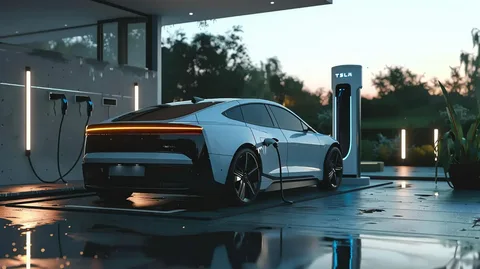
Tesla’s extensive Supercharger network is another example of how the company is reshaping the automotive landscape.
By providing a vast network of fast-charging stations, Tesla has alleviated one of the key concerns for potential EV buyers—range anxiety. The success of Tesla’s charging infrastructure has pushed other automakers to invest in similar networks, creating a more robust and interconnected EV ecosystem.
Conclusion
Tesla’s latest quarterly earnings performance is nothing short of remarkable. The company’s continued innovation, production efficiency, and brand loyalty have propelled it to the forefront of the automotive industry.
As Tesla continues to break records and surpass expectations, its success is driving the global shift towards electric vehicles, challenging traditional automotive paradigms, and reshaping the future of transportation.
With its strong financial performance and a relentless focus on innovation, Tesla is not just driving towards success—it’s leading the charge towards a sustainable and electrified future for the automotive industry.