




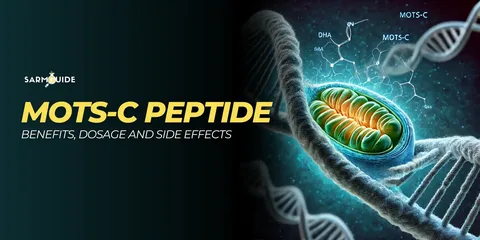
In the world of molecular biology, the mitochondria have long been nicknamed the “powerhouse of the cell.” However, research in 2026 has elevated their status from simple energy producers to sophisticated command centers. At the heart of this shift is MOTS-c (Mitochondrial Open Reading Frame of the 12S rRNA-c), a unique 16-amino-acid peptide that has fundamentally changed how we understand cellular communication.
Unlike almost every other signaling molecule, which is programmed by the cell nucleus and sent to the mitochondria, MOTS-c is born within the mitochondrial genome itself. This creates a “bottom-up” or retrograde signaling pathway, where the mitochondria actually dictate instructions to the nucleus. For researchers and labs exploring MOTS-c for sale, this molecule represents the frontier of metabolic flexibility and longevity science.
1. The Molecular Blueprint: A Hidden Language
MOTS-c is a short-chain peptide with a precise sequence: Met-Thr-Phe-Arg-Asn-Thr-Pro-Ala-Asn-Ala-Arg-Leu-Asn-Arg-Pro-Arg. Its existence remained hidden for decades because it is encoded within the 12S ribosomal RNA gene of the mitochondrial DNA (mtDNA).
Traditional biology taught us that mtDNA only encoded 13 proteins, all focused on the electron transport chain. The discovery of MOTS-c blew that door wide open, revealing that our mitochondria are much more “vocal” than we imagined. When a cell feels metabolic pressure—whether from intense exercise, heat, or nutrient lack—MOTS-c is produced and travels directly into the nucleus. There, it physically binds to the DNA to “re-tune” how the cell processes fuel.
2. The Master Switch: How MOTS-c Regulates Metabolism
The most significant impact of MOTS-c lies in its ability to activate AMP-activated protein kinase (AMPK). Often called the “Master Metabolic Switch,” AMPK is what tells your body to stop storing energy and start burning it.
The AICAR Connection
MOTS-c doesn’t just flip the AMPK switch directly; it does so by increasing cellular levels of AICAR, a natural metabolic intermediate. This triggers a cascade of benefits that researchers are currently documenting in 2026:
-
Enhanced Glucose Disposal: Muscle cells become “thirsty” for sugar, pulling it from the bloodstream more efficiently, which is critical for studying insulin resistance.
-
Fatty Acid Oxidation: It signals the body to mobilize stored fat and use it as a primary energy source, effectively preventing the accumulation of lipid deposits in the liver.
-
Increased Insulin Sensitivity: By clearing out “metabolic gunk,” MOTS-c helps restore the body’s natural response to insulin, positioning it as a top subject in metabolic syndrome research.
3. Longevity Science: Reversing the “Bio-Clock”
A hallmark of biological aging is the breakdown of communication between the mitochondria and the nucleus. As we age, our natural production of MOTS-c begins to dry up. This leads to metabolic inflexibility—the inability of the body to switch between burning carbs and fat easily.
The “Youthful” Signature
In recent laboratory models, restoring MOTS-c levels has shown remarkable results in “re-aging” the metabolic profile of older cells. It addresses three major pillars of aging:
-
Sarcopenia Protection: It blocks myostatin, a protein that normally limits muscle growth, helping to preserve lean mass in aging models.
-
Mito-Biogenesis: It encourages the cell to grow new mitochondria, replacing the old, “leaky” ones that produce harmful free radicals.
-
Inflammation Control: By improving energy efficiency, it reduces “inflammaging”—the chronic, low-grade inflammation that drives heart disease and cognitive decline.
4. Synergy in the Lab: MOTS-c and NAD+
In 2026, cutting-edge research rarely looks at MOTS-c in isolation. Many investigators are now pairing MOTS-c with NAD+ (Nicotinamide Adenine Dinucleotide) precursors. While MOTS-c provides the “instructions” for better metabolism, NAD+ provides the “fuel” needed for cellular repair. Together, they create a synergistic effect that significantly boosts ATP (energy) production and DNA repair mechanisms, offering a more holistic view of cellular rejuvenation.
5. Potential Breakthroughs in Disease Management
The therapeutic potential of MOTS-c is being tested across several high-stakes medical frontiers:
-
Metabolic Disorders: It acts as a “motion mimetic,” providing some of the metabolic benefits of exercise even in sedentary models, which is vital for patients unable to perform physical activity.
-
Neuroprotection: Because the brain is the most energy-hungry organ, MOTS-c’s ability to protect the mitochondrial membrane is being studied to prevent the “energy crashes” associated with Alzheimer’s and Parkinson’s.
-
Cardiovascular Integrity: It helps protect heart tissue from oxidative stress and helps maintain the lining of blood vessels (endothelial function).
6. Precision Handling: The Researcher’s Protocol
For the scientific community, the efficacy of MOTS-c depends entirely on its structural integrity. As a 16-amino-acid peptide, it is delicate and easily destroyed by heat or light.
Storage and Reconstitution Best Practices
-
Thermal Stability: Lyophilized (freeze-dried) MOTS-c must be kept at -20°C for long-term storage. Even at room temperature, the molecular bonds can begin to degrade within hours.
-
Sterile Reconstitution: Most professional labs buy bacteriostatic water for reconstitution. This inhibited bacterial growth ensures that the peptide remains stable for up to 14 days when refrigerated.
-
Mechanical Stress: One of the most common mistakes is vigorous shaking. Researchers are advised to use a gentle swirling motion to dissolve the powder, as high-shear forces can literally “break” the peptide chain.
7. The Future of Mitochondrial-Derived Peptides
As we move further into 2026, MOTS-c is no longer just a “supplement” found on gray-market sites; it is a respected tool in the laboratory. It represents a paradigm shift where we treat the root cause of metabolic dysfunction—the mitochondria—rather than just treating the symptoms of high blood sugar or low energy.
Whether the goal is to enhance athletic endurance in research models or to find a key to reversing age-related decline, MOTS-c is the bridge. It reminds us that our bodies have an ancient, internal language, and we are finally learning how to join the conversation.