






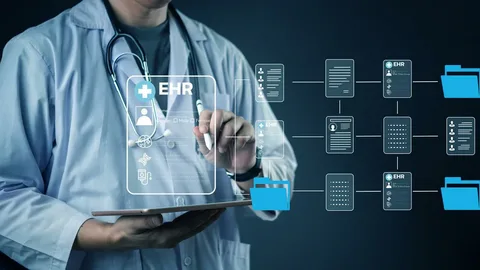
Healthcare organizations manage vast amounts of patient information every day. Electronic health records and electronic medical records store clinical histories, laboratory results, imaging data, prescriptions, and physician notes. While these systems are effective for record keeping, they often leave clinicians responsible for interpreting large volumes of data during limited consultation time.
For this reason, many healthcare providers are beginning to AI in EHR & EMR Integration platforms. Artificial intelligence systems can analyze patient records, identify patterns, and present insights directly within clinical workflows. Instead of replacing existing systems, AI healthcare applications extend their analytical capability.
When used carefully, these tools support better clinical decisions, reduce administrative workload, and help healthcare teams identify patient risks earlier. The following sections explain why healthcare providers are pursuing AI integration and the most practical use cases that are already appearing in hospitals and clinics.
Why Healthcare Providers Are Integrating AI in EHR & EMR Integration Systems
The decision to AI in EHR & EMR Integration systems is largely driven by operational and clinical pressures. Healthcare organizations face growing data complexity while clinicians must make faster decisions.
Increasing Patient Data Complexity
Modern healthcare generates data from many sources. These include electronic records, laboratory systems, imaging equipment, wearable devices, and remote monitoring tools. A single patient may have thousands of data points spread across multiple systems.
Reviewing this information manually is difficult during routine appointments. AI healthcare applications assist by analyzing records quickly and highlighting relevant patterns or anomalies.
Demand for Faster Decision Making
Clinical decisions often depend on the timely interpretation of data. For example, recognizing early signs of sepsis or cardiac complications requires reviewing multiple indicators at once.
AI clinical decision support tools analyze patient data continuously and alert clinicians when patterns indicate potential risk. This helps physicians respond earlier and with greater confidence.
Pressure to Reduce Clinician Workload
Administrative work remains one of the most common sources of physician fatigue. Documentation, coding, and record management can occupy several hours each day.
AI automation in healthcare addresses this problem by assisting with repetitive tasks such as note generation, coding suggestions, and appointment coordination. These improvements allow clinicians to focus more time on direct patient care.
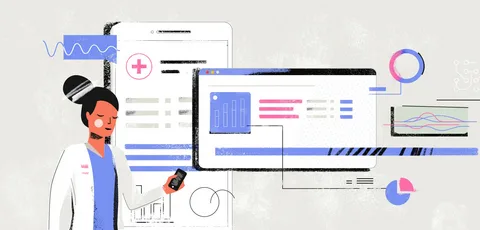
Top Use Cases When You Integrate AI in EHR & EMR Integration
Healthcare organizations are exploring many practical AI in EHR & EMR Integration platforms. Some focus on clinical analysis while others address operational efficiency. The following examples represent the most widely adopted applications.
AI-Powered Clinical Decision Support
Clinical decision support systems analyze patient records and compare them with medical knowledge databases. AI models review symptoms, diagnoses, and laboratory values to identify possible treatment considerations.
These systems may alert physicians about potential drug interactions, suggest diagnostic tests, or highlight unusual clinical patterns. When integrated directly into EHR platforms, decision support tools appear within the physician’s existing workflow.
Predictive Risk Scoring for Patients
Predictive analytics in healthcare uses historical patient data to estimate future risks. AI models examine patterns associated with complications such as heart failure, stroke, or hospital readmission.
Risk scoring tools assign probability values to patients based on their medical history, laboratory results, and vital signs. Clinicians can use this information to identify high-risk individuals who may require closer monitoring or preventive care.
Automated Clinical Documentation
Clinical documentation is essential for medical records and regulatory compliance. However, physicians often spend considerable time entering notes into EHR systems.
Natural language processing systems analyze conversations, physician dictation, or clinical notes and generate structured summaries. These tools assist with documentation while preserving accuracy and completeness in the medical record.
AI Assisted Medical Coding and Billing
Medical coding converts clinical documentation into standardized billing codes. The process requires careful review of diagnoses, procedures, and treatment details.
AI systems analyze physician notes and recommend relevant coding classifications. Human coders review these suggestions before submission. This approach reduces manual workload and improves consistency across large healthcare organizations.
Patient Readmission Prediction
Hospital readmissions represent a significant challenge for healthcare systems. Patients who return shortly after discharge often require additional treatment and monitoring.
AI predictive analytics healthcare models examine patient records to identify individuals with higher readmission risk. Factors such as chronic conditions, medication history, and recent procedures contribute to these predictions. Care teams can use this information to design follow-up plans or additional monitoring.
Population Health Analytics
Population health programs focus on improving outcomes across large groups of patients. AI healthcare applications help identify trends within large datasets.
Healthcare administrators may analyze patterns related to chronic diseases, medication adherence, or regional health risks. These insights support targeted intervention programs and long-term public health planning.
Early Disease Detection
Many diseases progress gradually before clear symptoms appear. AI systems can analyze laboratory values, imaging data, and clinical histories to identify early indicators of disease.
For example, models may detect subtle changes in laboratory trends that suggest kidney dysfunction or metabolic disorders. Early identification allows clinicians to begin treatment sooner.
Intelligent Scheduling and Resource Management
Hospitals must coordinate physicians, operating rooms, diagnostic equipment, and patient appointments. Scheduling errors can create delays or underutilized resources.
AI systems analyze historical appointment patterns, treatment durations, and patient demand. These insights help administrators plan schedules more efficiently and reduce waiting times.
Remote Patient Monitoring Insights
Remote monitoring devices collect data such as heart rate, glucose levels, or blood pressure from patients outside clinical settings. Integrating this information into EHR platforms provides continuous visibility into patient health.
AI models analyze these streams of data and alert clinicians if measurements fall outside expected ranges. This allows care teams to intervene before conditions worsen.
Personalized Treatment Recommendations
Personalized medicine aims to tailor treatment strategies according to individual patient characteristics. AI models review clinical histories, genetic information, and treatment outcomes to suggest possible care pathways.
When integrated with EHR platforms, these recommendations appear alongside patient records. Physicians review the suggestions and determine whether they align with clinical judgment.
How AI Use Cases Improve Healthcare Outcomes
The practical value of AI systems becomes clearer when examining how they influence clinical performance and patient care.
Better Diagnostic Accuracy
AI systems analyze large datasets that may include thousands of patient cases. These models identify patterns that may be difficult to detect during manual review.
Clinical decision support tools assist physicians by highlighting unusual results or correlations. The final diagnosis always remains the responsibility of the clinician, but AI analysis provides additional perspective.
Faster Treatment Decisions
Timely treatment decisions can significantly influence patient outcomes. Predictive analytics tools analyze clinical data in real time and notify physicians when potential risks appear.
Early detection of complications allows clinicians to act quickly, which may reduce hospital stays and prevent serious health events.
Reduced Administrative Burden
Administrative tasks remain a major challenge in healthcare operations. AI automation in healthcare supports documentation, coding, and scheduling activities.
Reducing these repetitive tasks allows physicians and nurses to spend more time interacting with patients rather than managing records.
Real World Example of AI Integration in EHR Systems
Several healthcare organizations have already integrated AI tools into clinical environments. One widely cited example involves the use of predictive analytics for sepsis detection.
Hospitals use machine learning models to monitor vital signs, laboratory results, and patient histories stored in EHR systems. When patterns suggest early signs of sepsis, the system alerts clinical staff.
Studies published in medical journals report that early detection systems can identify sepsis hours before traditional methods. Earlier treatment has been associated with improved survival rates and reduced complications.
Similar systems are now being explored for cardiac risk prediction, chronic disease management, and hospital workflow planning.
How Healthcare Organizations Can Identify the Right AI Use Cases
Healthcare organizations often begin with many potential AI applications. However, selecting the right use cases requires careful evaluation.
Several factors help guide decision-making:
- Clinical impact: Focus on problems where early detection or analysis can improve patient outcomes.
- Data availability: AI models require consistent and reliable datasets from EHR systems.
- Workflow compatibility: Tools should integrate smoothly with existing clinical routines.
- Regulatory compliance: All systems must meet privacy and data protection standards.
Many hospitals begin with small pilot programs that address a specific challenge. After successful trials, organizations expand the system to additional departments or patient populations.
Conclusion
Healthcare organizations are exploring many practical ways to AI in EHR & EMR Integration platforms. These integrations allow existing clinical systems to analyze large datasets and provide insights directly within medical workflows.
Common applications include clinical decision support, predictive risk analysis, documentation assistance, and population health monitoring. These tools assist clinicians in interpreting complex data while reducing administrative demands.
Successful implementation requires careful planning, reliable data infrastructure, and close collaboration between healthcare professionals and technology teams. When these conditions are met, AI can support more informed clinical decisions and improve the overall efficiency of healthcare delivery.