






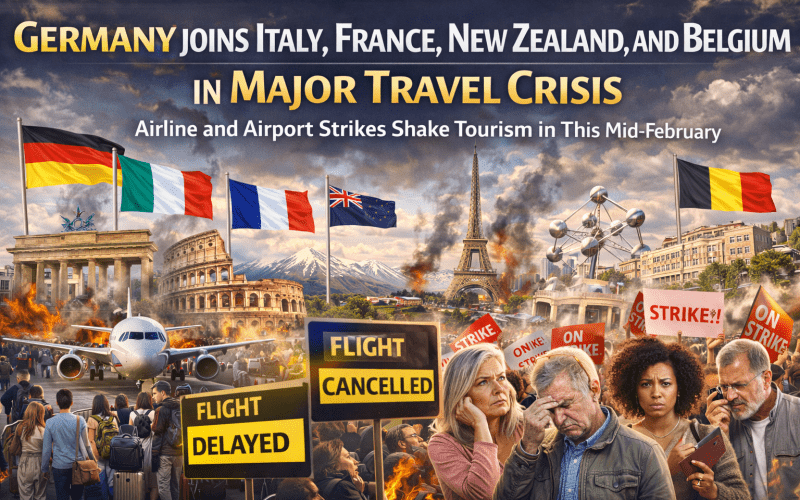
Mid-February is usually a time for late-winter getaways and early spring planning, but 2026 has thrown a wrench into the works. Travelers across the globe are facing a “perfect storm” of disruptions. With Germany’s latest airport walkouts joining ongoing industrial actions in Italy, France, and Belgium, the ripple effects are reaching as far as New Zealand.
If you have a flight booked this week, you aren’t just looking at delays—you’re looking at a complete overhaul of the tourism landscape. Here is everything you need to know about the mid-February travel crisis and how to protect your trip.
What is causing the mid-February travel crisis in Germany and Europe?
The primary driver is a series of coordinated and rolling strikes by airport ground staff, security personnel, and airline crews. In Germany, the Verdi union has called for major walkouts at hubs like Frankfurt and Munich, demanding better pay to combat inflation. Simultaneously, France and Italy are dealing with air traffic control disputes, while Belgium faces logistical strikes at Brussels Airport. This “cluster” of activity has effectively paralyzed European airspace.
Which airlines are most affected by the current airport strikes?
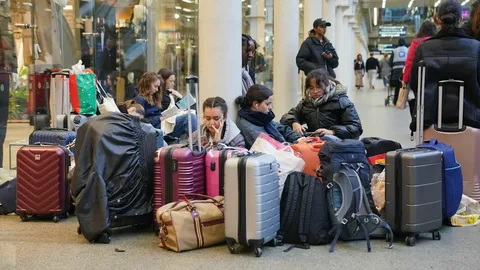
Lufthansa is currently the hardest hit, with hundreds of flights canceled daily across its German hubs. However, the crisis isn’t limited to German carriers. Air France, Brussels Airlines, and ITA Airways have all issued warnings. Even low-cost carriers like Ryanair and EasyJet, which rely on secondary airports, are seeing massive scheduling shifts because those “backup” airports are becoming overcrowded with diverted passengers.
How do the European airline strikes affect travel to New Zealand?
You might think a strike in Berlin wouldn’t affect a trip to Auckland, but the global aviation network is tightly linked. Many travelers from the UK and Europe use German or French hubs as their first leg toward New Zealand. When these “feeder” flights are canceled, passengers miss their long-haul connections in Dubai, Singapore, or Los Angeles. This has led to a sudden surge in travelers being stranded mid-route, desperately needing to update their travel documents or NZeTA status.
Are flights to Belgium and France still operating during the strikes?
Operations haven’t ceased entirely, but they are “critically limited.” Airlines are being forced to prioritize long-haul international flights over short-haul domestic ones. If you are flying into Brussels or Paris from outside the EU, you have a better chance of landing, though you should expect multi-hour delays on the tarmac and significant baggage handling issues.
What are my rights if my flight is canceled due to an airport strike?
Under EU Regulation 261/2004, if your flight is canceled due to a strike by the airline’s own staff (like pilots or cabin crew), you may be entitled to compensation. However, strikes by airport staff (security or air traffic control) are often classified as “extraordinary circumstances,” meaning the airline doesn’t have to pay cash compensation. In any case, the airline is required to give you meals, beverages, and hotel lodging if you are stuck overnight.
How can I check if my flight to Italy is affected by the tourism crisis?
Italy often schedules its strikes (“Scioperi”) in advance. The best way to stay updated is to check the official website of the Italian Ministry of Transport or the specific airport’s “Real-Time Flights” page. Don’t wait for an email from the airline; these systems are often overwhelmed and may notify you only after you’ve already left for the airport.
Is it safe to book a trip to Europe in mid-February?
Safety isn’t the issue—reliability is. While it is perfectly safe to visit these beautiful destinations, the “mid-February travel crisis” suggests that travelers should avoid tight connections. If you must travel now, ensure you have comprehensive travel insurance that covers “scheduled airline failure” and “industrial action.”
How long are the airline strikes in Germany expected to last?
Most current walkouts are “warning strikes,” lasting 24 to 48 hours. However, the underlying labor disputes remain unresolved. Experts suggest that intermittent disruptions will continue throughout the rest of February until a new collective bargaining agreement is reached.
Do I need a new visa if my flight to New Zealand is delayed?
This is a common concern for those heading to the South Pacific. If your flight is diverted or delayed by several days, you must ensure your New Zealand Electronic Travel Authority (NZeTA) is still valid. Most NZeTAs are valid for multiple entries over two years, but if you were forced to change your passport or if your stay exceeds the allowed duration due to a delay, you may need to consult with a visa expert immediately.
Can I get a refund for a flight canceled by an airport strike in Belgium?
Yes. If the airline cancels your flight, they must offer you a choice between a full refund within seven days or re-routing to your final destination at the earliest opportunity. If you choose the refund, the airline’s obligation to provide “duty of care” (hotels/meals) ends immediately.
How does the NZeTA help during international travel disruptions?
The NZeTA (New Zealand Electronic Travel Authority) is a digital lifesaver during a crisis. Because it is linked electronically to your passport, it allows for faster processing once you finally reach the border. In times of chaos, having your NZ eTA pre-approved means one less hurdle to jump when you finally land in New Zealand after a grueling, delayed journey.
Why should I use a professional visa service during a Mid-February travel crisis?
When airports are in chaos, the last thing you want is a paperwork error. A professional service ensures your application is “strike-proof” by being 100% accurate, preventing any further delays at the boarding gate.
Navigating the Chaos with Confidence: Why Choose Us?
Amidst the global Mid-February travel crisis, securing your travel documents shouldn’t be another source of stress. Whether you are heading to New Zealand or navigating the hurdles of European travel, we are here to simplify the process.
- Reliable Travel Visa Services: Our global approach has assisted numerous travelers in obtaining their visas and NZeTAs, even during peak disruption periods.
- Round-the-Clock Assistance: Travel doesn’t stop at 5 PM, and neither do we. Reach out to us 24/7, and our experts will respond within 72 hours to solve your queries.
- Experienced Visa Consultants: Don’t leave your trip to chance. Receive expert guidance to ensure the acceptance of your application on the first try.
- Efficient Visa Application Process: Apply for your Visa or NZeTA in minutes with our simplified, user-friendly form.