





In an era where construction industries worldwide seek sustainable alternatives to traditional materials, glue laminated timber has emerged as a quiet revolution. Often called glulam, this engineered wood product combines the natural beauty of timber with the structural reliability of modern manufacturing, creating possibilities that solid lumber alone cannot achieve.
The numbers tell an compelling story about growing acceptance of this versatile material. According to recent market analysis from Kings Research, the global glue laminated timber market reached approximately $2.61 billion in 2022. By 2030, researchers project this figure will climb to $4.28 billion, representing steady annual growth of 6.37 percent throughout the forecast period.
These figures reflect more than market expansion. They represent a fundamental shift in how architects, builders, and developers approach construction projects. Glue laminated timber answers multiple demands simultaneously: the need for sustainable building materials, the desire for design flexibility, and the requirement for structural reliability that matches or exceeds conventional options.
Understanding What Makes Glulam Special
Before exploring market dynamics, it helps to appreciate what glue laminated timber actually is and why it offers advantages over both solid wood and alternative materials like steel and concrete.
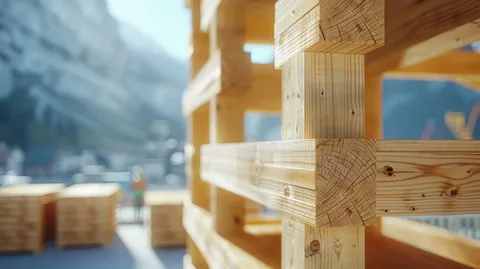
Manufacturers create glulam by bonding together individual layers of dimensioned lumber using durable, moisture-resistant adhesives. The grain of each layer runs parallel to the length of the member, creating a composite that maximizes the natural strength of wood while minimizing its weaknesses. This lamination process allows for the production of structural elements much larger and stronger than could be cut from any single tree.
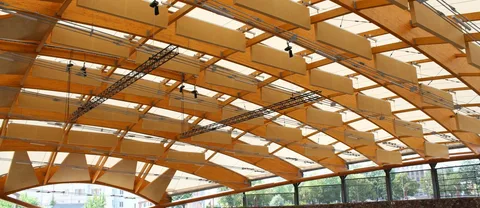
The resulting material offers several distinctive advantages. Because manufacturers can select and position lumber grades strategically within the finished product, glulam achieves consistent strength properties that solid wood cannot guarantee. The lamination process also allows for curved shapes and tapered profiles, freeing architects from the straight-line constraints of conventional timber.
From an environmental perspective, glulam makes excellent use of the forest resource. Smaller trees that might otherwise go to pulp or waste can be incorporated into structural members, and careful grade placement ensures that premium wood appears only where strength requirements demand it. This efficiency reduces pressure on old-growth forests while supporting sustainable forestry practices.
The Competitive Landscape
Companies competing in the glue laminated timber market bring diverse backgrounds and strategic approaches to this growing industry.
Mayr-Melnhof Holz Holding AG has established itself as a significant European player, leveraging generations of forestry experience to produce high-quality engineered wood products. The company’s vertical integration—from forest management through final manufacturing—provides quality control that customers in demanding construction markets appreciate.
Western Forest Products brings North American expertise to the market, drawing on British Columbia’s abundant timber resources. The company focuses on serving construction markets across Canada and the United States, where growing acceptance of mass timber construction creates expanding opportunities.
Moelven operates primarily in Scandinavia, a region with deep cultural connections to wood construction and progressive building codes that encourage timber use. The company’s experience with large-scale timber projects provides valuable expertise for expanding markets elsewhere.
Boise Cascade represents the entry of traditional building materials suppliers into engineered wood. With established distribution networks and customer relationships across North America, the company can introduce glulam products to builders already familiar with its other offerings.
Binderholz GmbH has built its reputation on Austrian precision and innovation. The company operates one of Europe’s most advanced wood processing facilities, producing glulam products that meet the demanding standards of Central European construction markets.
Structurlam Mass Timber Corporation has positioned itself at the forefront of North American mass timber adoption. The company’s involvement in landmark projects demonstrates how glulam can replace steel and concrete in applications previously considered impossible for wood.
Smaller specialized players like B&K Structures show how focused expertise creates market opportunities. By concentrating on specific applications or geographic regions, these companies develop deep knowledge that generalist competitors cannot match.
This competitive diversity benefits customers by ensuring multiple supply sources, encouraging continuous innovation, and maintaining pressure on both pricing and quality. For businesses considering entry into this space, understanding how different competitors position themselves proves essential for identifying underserved segments and differentiation opportunities.
Growth Drivers Reshaping the Market
Several powerful forces are accelerating glue laminated timber adoption across global construction markets. Understanding these drivers explains why market projections remain consistently optimistic.
The sustainability imperative ranks among the most significant factors. Construction accounts for approximately 40 percent of global carbon emissions, and pressure to reduce this footprint grows annually. Glulam offers a compelling alternative to steel and concrete, both of which carry substantial carbon costs. Wood sequesters carbon rather than emitting it during production, and responsibly managed forests continue absorbing carbon as they regenerate.
Building code evolution supports this shift. In North America, Europe, and increasingly Asia, regulations now permit timber construction at scales previously restricted to non-combustible materials. These code changes reflect growing understanding of mass timber’s fire performance—contrary to intuition, large timber members char slowly and predictably, maintaining structural integrity longer than steel under fire conditions.
Architectural preferences have shifted toward biophilic design principles that connect building occupants with natural materials. Glulam’s warm appearance and visible wood grain satisfy this desire while providing structural performance that hidden steel frames cannot match aesthetically. Exposed glulam beams and columns have become signature elements in modern buildings ranging from schools to commercial offices.
Urbanization and the need for taller buildings create unexpected opportunities. As cities grow denser, construction must go upward rather than outward. Mass timber systems incorporating glulam now make wood construction viable for mid-rise and even high-rise buildings, opening markets previously closed to timber products.
Understanding Market Segmentation
Breaking the market into segments reveals where opportunities concentrate and how different applications prioritize different product attributes.
By application, the market divides into several distinct categories. Floor and roof beams represent a substantial segment, where glulam’s strength-to-weight ratio provides advantages over heavy steel sections. Replacement applications involve upgrading existing structures, often in renovation projects where weight considerations matter enormously. Household framing uses glulam for residential construction, particularly in markets where timber framing traditions remain strong.
Window and door headers demonstrate how glulam serves specific structural roles within larger assemblies. These components must carry loads while maintaining dimensional stability—a requirement glulam meets reliably. Supporting columns showcase glulam’s ability to carry substantial vertical loads while maintaining aesthetic appeal in exposed applications.
Ridge and curved beams perhaps best demonstrate glulam’s unique capabilities. These components cannot be produced from solid timber at all; only lamination allows the curved shapes that create dramatic architectural effects. Architects seeking distinctive designs increasingly specify curved glulam for signature projects.
By end-use, building and construction dominates the market, but this broad category contains significant diversity. Commercial construction demands different product characteristics than residential work. Institutional projects like schools and hospitals prioritize different attributes than industrial facilities. Understanding these distinctions helps suppliers target their offerings appropriately.
Geographic Patterns and Regional Opportunities
Regional analysis reveals distinct consumption patterns and growth trajectories that matter for companies planning market entry or expansion.
Europe currently leads in glue laminated timber adoption, reflecting the continent’s progressive environmental policies, strong timber construction traditions, and building codes that embrace engineered wood. Scandinavian countries, Germany, Austria, and Switzerland have particularly developed markets where architects and builders understand glulam’s capabilities and specify it routinely.
North America represents the most dynamic growth region. The United States and Canada possess abundant timber resources, established wood products industries, and growing acceptance of mass timber construction. Recent code changes permitting taller wood buildings have opened vast new markets, and major projects in cities like Portland, Minneapolis, and Vancouver demonstrate what’s possible.
Asia Pacific shows enormous potential driven by several factors. Japan has deep cultural connections to wood construction and sophisticated timber engineering capabilities. China’s construction volume creates opportunities at massive scale, particularly as environmental concerns encourage alternatives to carbon-intensive materials. Australia and New Zealand have active timber construction sectors and growing mass timber expertise.
Latin America and Middle East & Africa currently represent smaller markets but offer growth potential as construction industries develop. Brazil’s forest resources and construction activity create opportunities, while Middle Eastern diversification efforts may eventually embrace timber construction for appropriate applications.
Strategic Implications for Industry Participants
For companies already active in glue laminated timber markets, the growth outlook suggests opportunities for strategic expansion. Increasing production capacity ahead of demand requires capital investment but positions companies to capture market share as consumption grows. Developing specialized products for specific applications improves margins and strengthens customer relationships. Expanding geographic presence, particularly in fast-growing North American and Asian markets, opens new revenue streams.
For businesses considering entry, the market’s growth and diversity create multiple potential paths. Specializing in particular applications or regions allows focused development without competing across the entire market spectrum. Partnership with established players can provide market access while building capabilities. Acquisition of smaller specialized manufacturers offers faster entry for companies with capital to deploy.
For investors evaluating opportunities, the steady growth projected through 2030 suggests patient capital can generate attractive returns. Understanding which regions grow fastest and which companies position themselves best for that growth enables informed investment decisions. The material’s essential role in sustainable construction provides confidence that demand reflects structural trends rather than temporary fads.
Navigating Market Uncertainties
Despite positive growth projections, market participants must prepare for potential disruptions. Raw material availability affects all wood products industries, and competition for fiber may intensify as demand grows. Adhesive technology developments could change product characteristics or manufacturing economics. Building code evolution will continue shaping market potential, with changes moving in generally favorable directions but unpredictable timing.
Successful companies address these uncertainties through strategic diversification. They serve multiple application segments rather than depending on any single market. They maintain relationships with multiple timber suppliers to ensure raw material access regardless of local disruptions. They invest in research that identifies new applications and improves production efficiency. They monitor regulatory developments and adapt proactively rather than reacting to changes after they occur.
Looking Forward
The glue laminated timber market exemplifies how traditional materials can be reimagined for modern construction challenges. Its unique combination of sustainability, structural performance, and aesthetic appeal solves problems that architects and builders increasingly confront.
The projected growth from $2.61 billion to $4.28 billion by 2030 represents more than market expansion. It reflects real-world adoption of building solutions that reduce carbon footprints, create beautiful spaces, and perform reliably over decades of service. For companies, investors, and industry professionals, understanding this market provides insight into broader construction trends and the opportunities they create.
Success in this space requires more than awareness of current conditions. It demands understanding of underlying drivers, appreciation for regional differences, and ability to navigate uncertainties. The companies that combine these capabilities with technical expertise and customer focus will find themselves well positioned to capture value from glue laminated timber’s growing market acceptance.
In a world where construction must become more sustainable while meeting increasing demand, glue laminated timber offers a path forward that honors tradition while embracing innovation. Its continued adoption across global markets ensures this remarkable material will play an increasingly important role in shaping the built environment for generations to come.