





In the modern education landscape, one question continues to divide educators and parents alike — should preschoolers spend more time playing or studying? As parents look for the Best Preschool in Pune or the Best Preschool in Hyderabad, this question often shapes their choice. Many preschools promise early literacy and math skills, but researchers increasingly agree that play-based learning lays a stronger foundation for long-term academic and emotional success.
1. Understanding the Role of Play in Early Learning
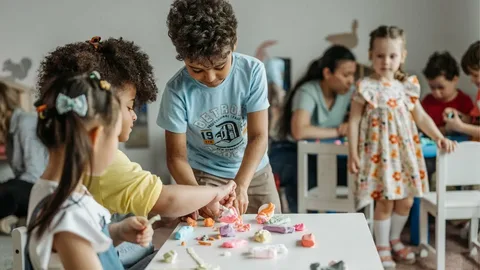
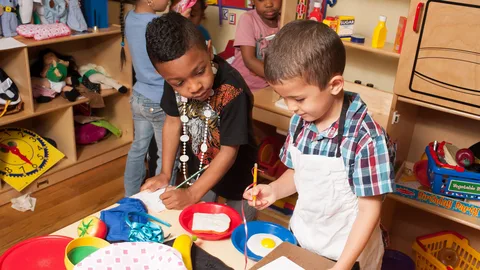
Play is not just fun—it’s the natural way children learn. Through play, children develop cognitive, social, and emotional skills that formal academics often overlook. Activities like pretend play, building blocks, or storytelling strengthen problem-solving, creativity, and collaboration—skills vital for the 21st century.
The best play school in Indirapuram emphasizes experiential learning, where play forms the core of its curriculum. Children are encouraged to explore concepts freely rather than memorize facts. This approach ensures that learning remains joyful and curiosity-driven.
2. What Research Says About Play-Based Education
Studies from Harvard University’s Center on the Developing Child reveal that play supports brain architecture by strengthening neural connections related to executive functions — memory, attention, and self-control. These are the very skills that help children succeed in school later on.
Research published in Developmental Psychology also found that children who attended play-based preschools demonstrated better social skills and adaptability in elementary grades than those in heavily academic environments.
Moreover, countries like Finland — known for their world-class education systems — delay formal academics until age seven, focusing instead on free play, nature exploration, and storytelling during preschool years. The result? Higher literacy rates and stronger problem-solving skills as children grow.
3. The Downsides of Pushing Early Academics
The race for early literacy and numeracy can sometimes backfire. Overemphasis on worksheets, rote learning, and structured lessons at a young age may cause stress and limit creativity.
When preschool becomes a mini version of formal school, children may lose motivation and develop anxiety toward learning. Neuroscientists point out that children under six learn best through sensory experiences and social interaction—not through memorization or testing.
Parents seeking the Best Preschool in Pune are now becoming more aware of this balance. Quality preschools understand that strong academic foundations don’t mean early academics; they mean developing cognitive readiness through play, exploration, and real-world connections.
4. The Science Behind Long-Term Success
Longitudinal studies, such as the Perry Preschool Project, have shown that children in play-based programs perform better in life outcomes including school achievement, emotional well-being, and employment rates.
Here’s why:
- Emotional Regulation: Play teaches patience, cooperation, and empathy
- Critical Thinking: Open-ended play enhances logical reasoning and creativity
- Social Development: Group play builds communication and teamwork
- Intrinsic Motivation: Children learn because they want to, not because they have to
Dr. Alison Gopnik, a renowned child psychologist, notes that young learners are like “little scientists.” When allowed to play, they experiment, hypothesize, and learn naturally—skills that become the foundation of lifelong curiosity and problem-solving.
5. Balancing Play and Early Academics: The Ideal Approach
It’s not about eliminating academics but integrating them meaningfully. For instance, storytelling can develop language skills, cooking activities can introduce basic math, and nature walks can teach science and observation.
The Best Preschool in Hyderabad follows this integrated model. Learning happens organically — letters are introduced through songs, numbers through games, and science through experiments. This method ensures children build strong pre-literacy and numeracy foundations while still enjoying the magic of childhood.
6. The Role of Parents and Educators in Nurturing Balanced Growth
Parents often feel pressured to ensure their child “keeps up” academically. However, educators emphasize that early childhood is not a race—it’s a journey. Encouraging unstructured playtime at home, reading together, and engaging in hands-on activities can reinforce what’s learned in preschool naturally.
Teachers also play a vital role by creating emotionally safe spaces where mistakes are part of the learning process. Classrooms that value curiosity over correctness help children develop confidence and love for learning—qualities that last a lifetime.
7. Real-World Outcomes: How Play Shapes Lifelong Learners
Children from play-based programs often display stronger adaptability in changing environments. In a world where innovation, collaboration, and emotional intelligence matter more than rote knowledge, early exposure to play-based education gives children a significant edge.
For example, employers today prioritize skills like creativity, teamwork, and critical thinking—traits cultivated in playful, exploratory early environments. By contrast, children trained solely for test performance may struggle with flexibility and resilience later on.
8. Why the Best Preschools Focus on the Joy of Learning
Top preschools across India—including Makoons centers in Pune, Hyderabad, and Indirapuram—follow a balanced, child-first philosophy. Their classrooms aim to inspire exploration with storytelling areas, sensory experiences, and group play.
The best play school in Indirapuram reinforces that “learning happens everywhere”—from sandpits to music rooms. When children are emotionally secure and curious, academic excellence follows naturally.
Conclusion: Redefining Success in Early Play-based learning
Long-term success isn’t about reading at age four or solving sums in preschool—it’s about building curiosity, emotional intelligence, and a love for discovery. Research consistently shows that play-based learning not only boosts academic performance later but also promotes happier, more balanced individuals.
As parents explore options like the Best Preschool in Pune or Best Preschool in Hyderabad, the focus should shift from early achievement to holistic growth. The best preschools don’t rush childhood; they honor it—one playful moment at a time.