



Introduction: Decelerating the Biological Clock
Aging is a multifaceted biological process—essentially a tug-of-war between the accumulation of cellular damage and the decline of repair mechanisms. Among the vast array of phytonutrients, Lycopene, a potent carotenoid, stands out due to its unique long-chain molecular structure.
Renowned as one of nature’s most powerful antioxidants, it functions not merely as a pigment but as a “biological decelerator.” This article explores the origins, biochemical pathways, clinical significance, and the ultimate application of lycopene in dermatological health and longevity.
The Essence and Biological Origins of Lycopene
1.1 Molecular Structure: Why It Is the “Antioxidant King”
Lycopene is a tetraterpene hydrocarbon with the chemical formula C40H56. Its structural hallmark is a chain of 11 conjugated double bonds. This highly unsaturated configuration allows it to quench reactive oxygen species (ROS)—specifically singlet oxygen (1O2)—with unparalleled efficiency.
Scientific data indicates that it’s singlet-oxygen-quenching capacity is 100 times greater than that of Vitamin E and more than twice that of beta-carotene. This physical-chemical profile places it at the frontline of cellular membrane protection.
1.2 Natural Distribution and Bioavailability
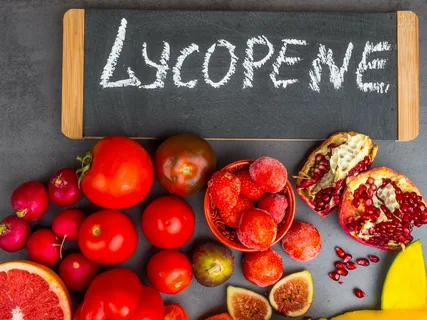
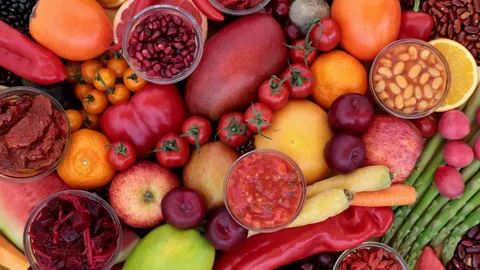
While tomatoes are the primary dietary source, lycopene is found in several “superfoods”:
-
Tomatoes & Derivatives: Higher concentration occurs with ripeness and sun exposure
-
Tropical Fruits: Papaya, red guava, and pink grapefruit.
-
Summer Fruits: Watermelon (interestingly, watermelon lycopene is often more bioavailable in its raw state than raw tomatoes).
-
Industrial Extraction: High-end supplements typically utilize Blakeslea trispora fermentation or CO2 supercritical extraction from non-GMO tomatoes.
Biochemical Mechanisms of Anti-Aging
2.1 Combatting Oxidative Stress and DNA Damage
The “Mitochondrial Theory of Aging” suggests that decay stems from oxidative hits to our cellular power plants. Lycopene penetrates the phospholipid bilayer of cell membranes, neutralizing endogenous free radicals. Studies show that consistent lycopene intake significantly reduces serum levels of 8-OHdG, a gold-standard biomarker for oxidative DNA damage, thereby slowing aging at the genetic level.
2.2 The “Firefighter” for Inflammaging
As we age, the body enters a state of low-grade chronic inflammation known as “inflammaging.” Lycopene inhibits the NF-kB signaling pathway, reducing the release of pro-inflammatory cytokines such as IL-6 and TNF-alpha. This systemic anti-inflammatory effect is crucial for preventing age-related neurodegeneration and joint degradation.
2.3 Enhancing Gap Junction Intercellular Communication (GJIC)
Aging cells often lose the ability to communicate. Lycopene induces the expression of Connexin 43 (Cx43), improving signals between cells. This enhanced “cellular networking” ensures that organs function as a cohesive unit, maintaining youthful metabolic efficiency.
Lycopene in Aesthetics: The “Internal Sunscreen”
3.1 Defying Photoaging: Internal UV Protection
Photoaging accounts for approximately 80% of visible skin aging. When UV rays strike the skin, they generate a cascade of ROS that break down the extracellular matrix.
-
Clinical Evidence: In a controlled study, participants consuming 16 mg of lycopene daily for 12 weeks showed a 33% increase in skin protection against UV-induced erythema (sunburn).
-
The Pathway: Lycopene deposits in the dermis, neutralizing UV-induced radicals before they can degrade collagen and elastin fibers.
3.2 Inhibition of Melanogenesis and Skin Brightening
Beyond wrinkle prevention, lycopene regulates oxidative balance to indirectly inhibit tyrosinase activity. This helps reduce hyperpigmentation, age spots, and sallow skin tones, resulting in a more radiant complexion.
The Art of Dietary Synergy: Maximizing Absorption
Lycopene is a “selective” nutrient; improper consumption can lead to 90% of the compound passing through the body unabsorbed.
4.1 The Necessity of Thermal Processing
In raw tomatoes, lycopene exists in a “trans-isomer” configuration—long, rigid, and poorly absorbed.
-
The Processing Effect: Heat (boiling, steaming) and mechanical breakdown (crushing) break cell walls and convert the molecule into “cis-isomers.” The cis-form is more soluble in bile acid micelles and enters the lymphatic system with ease.
4.2 The Lipid Medium: Why Olive Oil is Essential
As a fat-soluble compound, lycopene requires a “vehicle” for transport.
-
Synergy: Olive oil’s oleic acid modifies the composition of chylomicrobes in the gut, accelerating lycopene transport.
-
The Golden Ratio: Ideally, 5–10 grams of healthy fats should accompany every 100 grams of tomato-based food.
Targeted Dosage by Age Group
To achieve optimal anti-aging and aesthetic results, daily intake should be tailored to one’s life stage:
| Age Group | Recommended Daily Intake | Core Objective |
| Youth (12-18) | 5 – 10 mg | Establishing a basal antioxidant barrier. |
| Early Adulthood (19-45) | 10 – 20 mg | Prevention: Focus on anti-photoaging and collagen retention. |
| Mature Adulthood (46-65) | 20 – 30 mg | Repair: Cellular restoration and cardiovascular elasticity. |
| Seniors (65+) | 30 – 45 mg | Longevity: Protecting vision (macula) and immune health. |
Global Trends and Future Applications
6.1 Functional Foods and Beverages
As a natural colorant (E160d), lycopene is increasingly used in premium wellness drinks and dairy products, replacing synthetic dyes while providing functional health benefits.
6.2 Advanced Skincare Research
Dermatological brands are now utilizing nano-encapsulated lycopene in serums. This technology overcomes the stability issues of the molecule, allowing for targeted delivery into the deeper layers of the epidermis to repair environmental damage in real-time.
Conclusion: The Vitality of Red
Lycopene is more than just a pigment in a salad; it is a sophisticated biological tool for longevity. By mastering the science of its preparation—combining heat and healthy lipids—and following a disciplined intake regimen, we can leverage this “red miracle” to protect our cells, preserve our skin, and maintain youthful vigor well into our later years.