



The food sector is undergoing a major digital shift, as intelligent cooling technology reshapes benchmarks for protection and performance.
From agricultural sourcing to final consumption, preserving an unbroken chill sequence remains vital for retaining quality, limiting decay and satisfying legal obligations.
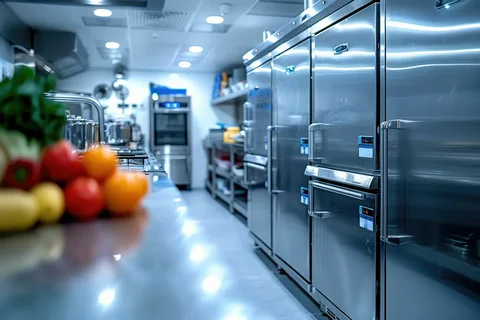
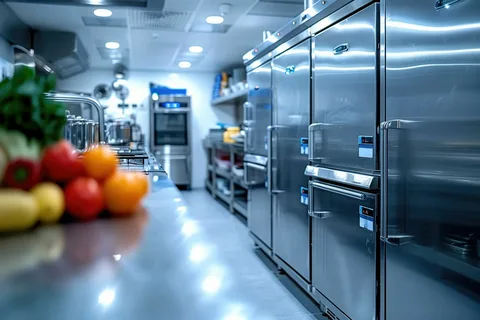
Commercial refrigeration solutions sit at the center of this evolution, combining intelligent tracking, automated functions and analytical intelligence to maintain ideal holding environments across every phase.
These advanced systems surpass conventional cooling approaches. Through the use of smart detectors, self-regulating climate settings and off-site oversight, food operators can identify irregularities before they become serious.
Commercial refrigeration solutions now act as strategic allies, actively supporting standards, conformity and consumer confidence rather than simply lowering temperatures.
1. Continuous Oversight to Protect Food Integrity
Intelligent commercial refrigeration solutions provide nonstop observation of heat levels, moisture balance and equipment behavior.
Immediate access to live information ensures even minor variations from approved conditions are noticed without delay.
Automated notifications allow rapid intervention, stopping spoilage or health risks before they spread.
By supervising environments across storage rooms, transport vehicles and logistics hubs, organizations safeguard perishables throughout the entire cooling network.
2. Intelligent Regulation for Stable Cooling
Self-management is a defining capability of next-generation refrigeration. Commercial refrigeration solutions can independently fine-tune chill intensity based on surrounding climate, stored goods and holding periods.
Uniform thermal control restricts microbial activity, preserves taste and lowers deterioration risk. Automated operation also reduces reliance on manual inspections, increasing productivity while maintaining high-quality standards.
By adjusting cooling cycles to actual demand, reducing waste, and cutting operating expenses, advanced refrigeration keeps boosting energy efficiency. By anticipating component wear, predictive maintenance features extend the life of equipment and prevent unplanned malfunctions.
Operators can manage several units from a single interface thanks to pairing with remote monitoring installations, guaranteeing uniform conditions throughout facilities.
Through supporting thorough reporting for audits and quality assurance initiatives, these capabilities strengthen supply chain accountability.
Modern commercial refrigeration solutions enable companies to uphold superior product quality, optimize resources, and confidently meet both regulatory and consumer expectations by fusing automation, adaptive control and data-driven insights.
3. Waste Reduction via Forecast-Based Servicing
Modern refrigeration platforms incorporate analytical tools that anticipate servicing requirements, including motor strain or seal degradation.
Commercial refrigeration solutions that notify teams ahead of failures help avoid sudden malfunctions and inventory damage.
Preventive servicing minimizes discarded stock, limits repair expenses and maintains uninterrupted functionality.
This forward-looking strategy shifts cooling management from problem response to risk prevention, strengthening dependability and safety.
4. Simplifying Compliance and Product Tracking
Food governance frameworks demand detailed thermal records and verifiable storage evidence. Smart commercial refrigeration solutions automatically document these details, easing alignment with domestic and global regulations.
Electronic logs streamline inspections, cut paperwork inaccuracies and confirm adherence to recognized standards.
Through integrated data capture, refrigeration innovation enhances traceability and reinforces responsibility across the entire supply route.
By offering real-time alerts for temperature changes or equipment failures, smart refrigeration systems enhance operational efficiency beyond compliance.
Early detection allows for quick corrective action while reducing product loss, preventing spoiling, and minimizing financial impact.
These systems’ data analytics also aid in inventory optimization, assisting companies in better stock rotation management and demand forecasting.
Businesses can uphold high standards, protect consumer health, and improve brand reputation by fusing automated monitoring with actionable insights.
Incorporating savvy refrigeration into food operations promotes more intelligent, responsible, and sustainable supply chain management besides guaranteeing regulatory compliance.
5. Improving Energy Performance and Environmental Impact
Cutting-edge commercial refrigeration solutions are engineered to lower power usage without sacrificing effectiveness.
Innovations such as adaptive-speed motors, high-performance insulation and intelligent defrost scheduling reduce electricity demand while preserving exact cooling levels.
Lower energy consumption supports ecological goals and financial efficiency alike.
By decreasing overhead expenses and shrinking environmental impact, smart refrigeration advances sustainable food operations while safeguarding product excellence.
Businesses can also track and assess power consumption in real time with these energy-efficient equipment, spotting trends and areas for additional optimization.
Operators can take proactive measures to maintain optimal conditions and avoid needless energy waste when combined with automated alerts and performance analytics.
This data-driven strategy eventually reduces costs and promotes environmental responsibility.
Businesses can meet regulatory requirements, improve their corporate social responsibility profile, and reassure customers that high-quality and environmentally responsible practices coexist by combining intelligent refrigeration with more extensive sustainability initiatives.
As a result, innovative refrigeration is a must for effective, ethical and progressive food operations.
The Cold Chain Revolution
Smart commercial refrigeration solutions are reshaping food protection and workplace performance throughout the industry.
Through live condition tracking, self-adjusting mechanisms, forecast-driven servicing, compliance assistance and power-saving design, these systems safeguard perishable goods while reducing loss and overheads.
Adopting next-generation cooling technology empowers food operators to uphold standards, meet legal obligations and support eco-conscious practices—positioning intelligent refrigeration as a vital pillar of today’s cold chain infrastructure.
ABOUT THE AUTHOR:
Nicole Ann Pore is a versatile writer committed to creating well-researched and impactful content that informs and inspires.
By day, she writes compelling content for Taurus, a leading provider of commercial and industrial refrigeration services through Sydney, Australia.
Nicole is a Cum Laude graduate of De La Salle University Manila, Philippines, holding a Bachelor’s Degree in Communication Arts.