







Customer Relationship Management (CRM) software is an important component of managing leads, customers, sales pipelines, and maintaining long-term relationships for all types of businesses, from startups to SMEs to enterprises.
Once you find the CRM that meets your needs, there are significant differences in productivity, customer satisfaction and revenue generated directly associated with the type of CRM you select.
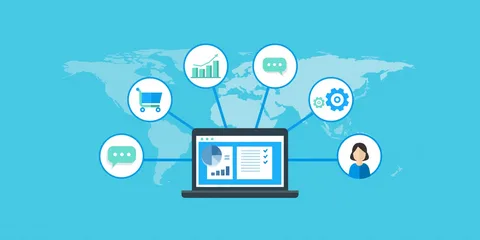
Many companies investigating CRM options, like outright crm pose the following question: Open Source CRM vs Proprietary CRM?
This article will provide a simple, concise comparison of these two types of CRMs in terms of how they work; their strengths and weaknesses; the costs associated with using each type; security; customization; scalability; and when each is most appropriate for you and your business.
You will be able to determine which type of CRM fits your business model best, based on the information provided.
What Is a CRM System?
Businesses use a CRM, or a Customer Relationship Management system. The system is designed to assist businesses with managing their interactions with both customers and potential customers.
This includes storing customer information, tracking all communications between the company and its customers, managing the activity of the sales pipeline, automating marketing functions, and providing the company with reports and analytics for greater insight into customer behaviour and preferences.
There are two major categories of CRM systems. Open-source CRM systems and Proprietary CRMs both aim to accomplish the same purpose; however, there are considerable differences in the amount of control, flexibility, cost and other support services offered by the system.
Understanding Open Source CRM
What Is Open-Source CRM?
CRM software that is open source is made from ‘publicly available source code’ which allows organizations to download and implement the software for free, change or modify it to meet specific needs, and create a version of the software that works best for them.
There are typically no licensing fees associated with open-source CRM; however, organizations may incur costs related to implementing, maintaining, and supporting their open-source CRM software.
Key Characteristics of Open-Source CRM
Open-source CRMS have ‘open’ code so users can look at each line of code and make changes to them.
That means organizations own the entire system and data associated with it. Many open-source development projects rely on contributors from around the world to help build and maintain the project.
Understanding Proprietary CRM
What Is Proprietary CRM?
A proprietary CRM program is owned and maintained by an individual business or a vendor, who will charge a subscription or licensing fee to use their software. Users do not have access to the source code and therefore cannot alter it.
Key Characteristics of Proprietary CRM
Most cloud-based or SaaS (Software as a Service) are considered proprietary CRMs. The vendor handles and provides everything – updates, security, infrastructure, and customer service. As a result, companies can implement these platforms quickly with little to no technical engineering.
Core Differences Between Open Source and Proprietary CRM Sotfware
Ownership and Control
An open-source CRM system gives the user access to all the software and its data, while a proprietary CRM system gives you only the access that the vendor designates within their program.
Customization Flexibility
Open-source CRMs are easy to custom build and can be modified extensively; whereas, proprietary CRMs also offer some customization options, but typically within a constrained framework.
Cost Structure
Open-source CRMs may look free but depending on how they are hosted, developed, and maintained by others, multiple costs can be incurred when implementing these systems;
whereas, the usage of a proprietary CRM will include the cost of ongoing subscriptions and may offer additional benefits such as technical support and infrastructure.
Pros of Open-Source CRM Software
Full Customization Freedom
An Open Source CRM is a system that enables Companies to have complete control over the development and implementation of the software.
This type of CRM is particularly useful for Businesses that have specialized processes or needs.
No Vendor Lock-In
The advantage of utilizing a CRM built on the Open Source Model is that Companies will not be dependent on any one vendor.
Businesses have the option to migrate to another platform, add extensions or add new features, and scale the solutions quickly without being constrained by any contractual obligations.
Cost Efficiency for Large Teams
For Businesses with a large number of users, Open Source CRMs may offer a much lower total cost of ownership or TCO, as opposed to paying subscription fees on a per-user basis.
Strong Community Support
Culture impact of popular open-source CRM vendors is positively impacted by having vibrant developer communities that create add-on products, plugins, and enhancements.
Cons of Open-Source CRM Software
Technical Expertise Required
While many companies offer free versions of their software, to be successful with an open source CRM typically requires skilled developers and/or IT professionals to implement and manage the application, which can pose challenges for small business owners.
Maintenance Responsibility
Due to the nature of open-source software, the business is responsible for maintaining and securing the application through regular updates, security patches and bug fixes.
Limited Official Support
Community support may offer assistance in this regard; however, most companies that provide professional services charge for the service.
Pros of Proprietary CRM Software
Easy Setup and Deployment
Due to the existence of large vendor networks and pre built integration with complimentary applications most proprietary customer relationship management (CRM) solutions allow for immediate implementation and use by the business.
Dedicated Customer Support
Vendors offer technical support, training, user manuals, and customer success teams to assist customers with implementation issues.
Automatic Updates and Security
Because most proprietary CRM solutions provide regular updates, database backups and security patches, the business does not need to assume responsibility for administrative responsibilities associated with operating the software.
Reliable Performance and Scalability
Most proprietary CRM solutions are built on advanced cloud based platforms and software architecture that can grow with your company.
Cons of Proprietary CRM
Higher Long-Term Costs
The increased number of licenses purchased as the number of users increases can result in increased subscription fees over time.
Limited Customization
Most proprietary CRM solutions have limitations set by the vendor, which may not meet the requirements of some specialized workflows.
Vendor Dependency
The roadmap and policies of the vendor determine the customer’s ability to migrate data, request new features, and make changes to the system.
Security and Compliance Considerations
Security is a major consideration when selecting a CRM. Open-source CRM is more transparent than proprietary CRM. Therefore, this transparency enables businesses to perform audits of the CRM’s source code and add their own security features.
However, because of this transparency, the organization assumes full responsibility for the protection of its data.
Proprietary CRM vendors spend substantial amounts of money on security, compliance certifications, and standards for protecting data.
Proprietary vendors also make sure their products comply with international laws, have built-in security features that help minimize risk for companies without dedicated IT staff, and are very user-friendly.
Integration and Ecosystem Capabilities
Today’s modern businesses utilize many different systems such as email platforms, accounting software, marketing automation products, and analytic tools.
The integration of the CRM system into these operational systems creates operational efficiencies.
When discussing how to connect to CRM systems, open-source implementations provide more flexibility because developers have the ability to create custom APIs (application programming interfaces) and custom integrations.
Proprietary systems typically come with prebuilt APIs and standard integrations that are simple to implement, but provide less flexibility when connecting to third-party applications or databases.
Scalability and Performance
The scalability of an open-source customer relationship management (CRM) system is substantially dependent on the infrastructure used to host it and the organization’s technical savvy.
If the open-source CRM is implemented properly, it will provide scalability with optimal performance; however, if an organization implements the product poorly, it will encounter significant performance-related issues.
The scalability of proprietary CRM systems is more transparent than open-source CRMs because the vendors have designed the proprietary systems so that as a company grows, it can add additional server resources to accommodate the increased volume of customer interactions.
In addition, with proprietary CRM vendors involved in the process of optimizing server performance, they are an ideal choice for organizations that are experiencing rapid growth.
Which CRM Is Right for Your Business?
Typical open-source CRM systems are a good fit for organizations that require extensive customization, have a high degree of technical know-how, and wish to maintain full ownership of their data and functionality.
These organizations also tend to have specific workflow processes that are not supported by most standard CRMs.
In contrast, proprietary CRM systems are best suited for organizations looking for a quick, reliable, and low-maintenance solution.
Proprietary CRMs are ideal for organizations with teams that are more focused on ease of use, vendor support, and predictable cost than on deep customization.
Final Thoughts
When selecting between open-source and proprietary CRM systems, organizations should weigh the advantages and disadvantages of each option prior to making a decision.
Organizations must also consider their size, technical capabilities, budget, and long term objectives when determining which option is best for their business.
Last but not least, companies need to continue to innovate and have a competitive advantage going forward.
As a result, more and more CRM systems are utilizing various forms of AI- technology to improve automation, increase insights into customer purchase patterns, and enhance the overall customer experience.