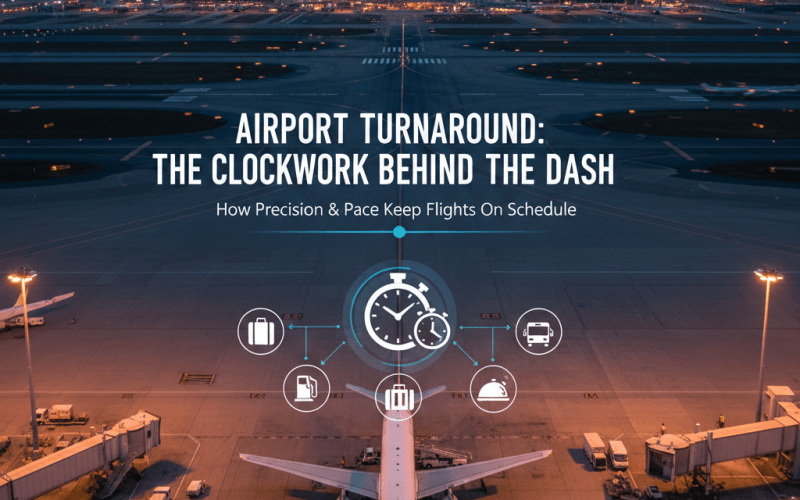
When a plane lands at an airport, it doesn’t sit idle for long. Within 30 to 90 minutes, the same aircraft must be ready to fly again with new passengers. This quick preparation process is called turnaround time or TAT. Managing this efficiently is crucial for airline profitability and passenger satisfaction.
Every minute an aircraft sits on the ground costs money to airlines. Delayed turnarounds lead to flight delays, missed connections, and unhappy passengers. That’s why airports and airlines work together using systematic processes and trained ground staff.
The aviation industry offers many airport jobs specifically focused on ground handling and turnaround operations, making it an exciting career option for people interested in fast-paced and basic work environments.

What is Aircraft Turnaround Time
Turnaround time is the period between when an aircraft arrives at the gate and when it departs again. During this time, multiple tasks happen simultaneously – passengers get off, the plane gets cleaned, refueled, restocked with food, and new passengers board.
For domestic flights in India, the average turnaround time is 30-45 minutes. International flights take longer, usually 60-90 minutes, because of additional services like duty-free loading and more extensive cleaning. Low-cost carriers like IndiGo aim for even shorter turnarounds to maximize aircraft utilization.
The Ground Handling Team
A large team coordinates aircraft turnaround. This includes airline staff, ground handling agents, catering services, refueling crew, cleaning teams, baggage handlers, and maintenance engineers. Each person has specific responsibilities that must be completed on time.
The ground coordinator oversees the entire operation. They arrive before the aircraft lands and ensure all teams are ready. Using walkie-talkies and coordination systems, they track progress of each task and solve problems quickly.
Step-by-Step Aircraft Turnaround Time Process
Aircraft Arrival and Parking
When an aircraft approaches the gate, the ground crew prepares for arrival. Marshals guide the pilot to park at the exact spot using hand signals or automated docking systems. Wheel chocks are placed to prevent the plane from moving.
Passenger Disembarkation
As soon as the door opens, passengers start getting off. The cabin crew assists elderly passengers and those with children. Airline staff at the gate manage passenger flow to prevent crowding on the boarding bridge.
Ground staff bring wheelchairs for passengers who need assistance. Unaccompanied minors are escorted to the arrival hall. This process usually takes 10-15 minutes depending on aircraft size and number of passengers.
Cabin Cleaning and Preparation
Cleaning teams enter immediately after passengers leave. They collect trash, replace seat covers, clean toilets, vacuum floors, and wipe surfaces. On longer turnarounds, they do deep cleaning including sanitizing armrests and tray tables.
Catering staff remove old food carts and load new ones with meals and beverages for the next flight. They check quantity matches the passenger count and verify special meal requests. Water tanks are refilled and lavatories are serviced.
Baggage and Cargo Operations
While passengers disembark, baggage handlers unload checked luggage from the aircraft hold. They use conveyor belts and baggage carts to transport bags to the terminal. Transit passengers’ bags are separated and loaded onto connecting flights.
New passengers’ baggage arrives from check-in counters. Handlers scan each bag, sort them by destination, and load them carefully into the aircraft hold. Cargo and mail also get loaded during this time. The entire baggage operation must complete before departure.
Aircraft Refueling
Fuel trucks arrive at the aircraft and connect hoses to fuel tanks. The amount of fuel depends on flight distance, weather conditions, and required reserves. Pilots calculate exact fuel needs to avoid carrying excess weight.
Refueling happens simultaneously with other operations to save time. Trained fuel operators follow strict safety procedures. They ensure no leakage and maintain proper grounding to prevent static electricity. Refueling for short domestic flights takes 15-20 minutes.
Final Checks and Pushback
After doors close, cabin crew demonstrate safety procedures. Ground staff remove the boarding bridge and disconnect ground power. Load planners give final weight and balance data to pilots.
A tow vehicle called pushback tractor connects to the aircraft’s nose wheel. Ground crew coordinates with pilots over headsets. The aircraft is pushed backward from the gate, tow bar disconnects, and pilots start engines. The plane taxis to the runway for takeoff.
Also read, best airport transportation service in Raleigh
Conclusion
Aircraft turnaround time management is a complex operation requiring precision, coordination, and teamwork. Every second counts, and ground staff work efficiently to prepare aircraft for the next flight. Understanding this process shows the incredible coordination happening behind the scenes at airports.
For those interested in aviation careers, ground handling offers exciting opportunities. The work is challenging but rewarding. You play a crucial role in keeping flights on schedule and passengers happy. As Indian aviation grows, demand for skilled ground handling professionals will increase.
Whether you’re interested in hands-on ramp work or coordination roles, the aviation sector offers diverse career paths in turnaround operations.